Risk Evaluated Before Trees Fail
Hazard Tree Assessment in Nacogdoches and Lufkin for trees showing structural failure signs, disease progression, or storm damage
Pine beetle damage and drought stress across Nacogdoches County and the Angelina National Forest corridor leave standing dead trees that appear healthy until they fail, making accurate assessment critical before major weather events. Eric Russell Tree Service provides systematic risk evaluation of trees showing visible decay, lean after storm loading, or dieback patterns that suggest internal failure. You need this service when a tree drops large limbs without wind, shows fungus growth at the base, or develops a sudden lean that wasn't present in prior seasons.
The assessment process includes root flare inspection for soil upheaval, visible trunk rot and fungus identification, and mallet strike testing for internal decay—a hollow sound indicates cavities where heartwood has rotted away. Every tree receives honest reporting: if it doesn't need to come down, the crew will say so and recommend alternatives such as cabling, crown reduction, or monitoring through the next growing season.
Request a hazard evaluation to confirm whether removal is necessary or if less invasive options address the risk.
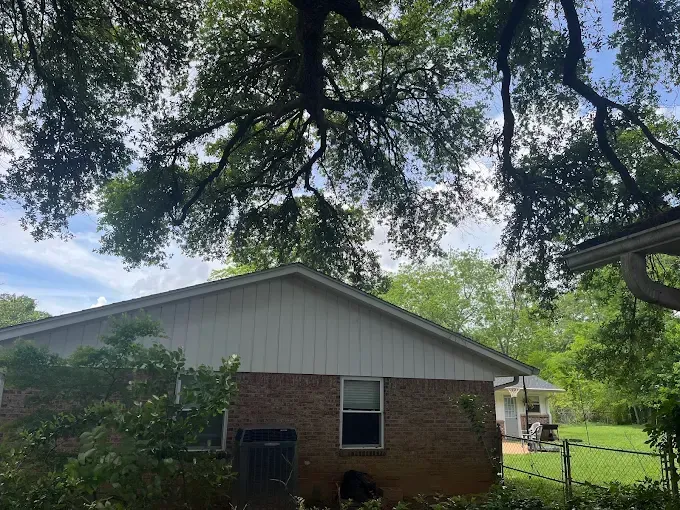
How Field Testing Reveals Hidden Structural Failure
Mallet strike testing involves tapping the trunk at multiple heights and listening for resonance changes that indicate internal voids. Solid wood produces a sharp, consistent sound, while decayed sections return a dull thud or hollow echo where rot has consumed load-bearing tissue. Resistograph testing is acknowledged as the gold standard—a drill measures resistance as it penetrates the trunk, graphing internal density—but it remains rare in this market due to equipment cost and training requirements.
After assessment, you'll know whether the tree poses immediate risk, requires monitoring, or can remain with corrective pruning. Visible changes include confirmed presence or absence of root plate lifting, identification of fungal fruiting bodies that signal advanced decay, and documentation of lean angle measured against vertical. Competitors exploit homeowner fear to push unnecessary removals, particularly after storm events when anxiety runs high and decision-making feels urgent.
The service provides transparency about methodology and limitations—external inspection reveals visible indicators, but internal decay often progresses undetected until failure occurs. With 27 years of field experience reading tree health indicators and full insurance coverage, the crew delivers the honest second opinion before you spend thousands on removal that may not be required.
Answers to Frequent Assessment Questions
Hazard evaluation in Deep East Texas addresses species-specific failure patterns, regional pest pressure, and environmental stressors common to timber-adjacent residential properties.
What signs indicate a tree needs professional assessment?
Sudden lean development, large dead branches in the upper crown, fungus growth at the trunk base, cracks in the main stem, or soil mounding around roots all warrant evaluation—these indicators suggest structural compromise that may not be visible from ground level.
How does mallet strike testing work in the field?
The assessor taps the trunk with a rubber mallet at chest height and higher points, listening for sound changes that indicate internal voids—solid wood rings clearly, while decayed sections produce muffled or hollow tones where rot has created cavities.
What's the difference between a hazard tree and a dead tree?
All dead trees are potential hazards, but not all hazard trees are dead—living trees with root damage, severe lean, or codominant stem cracks pose failure risk even with green foliage, while some dead trees remain structurally sound for years if decay hasn't reached critical mass.
When should assessment happen relative to storm season?
Evaluation before spring storm season identifies trees likely to fail during high winds, allowing removal during dry conditions when equipment access is easier—post-storm assessment documents new damage and determines whether leaning trees can be stabilized or must come down.
Why do some trees look healthy but still get flagged as hazards?
Pine beetle-killed trees often retain needles for months after infestation, appearing healthy while internal wood dries and weakens—external foliage doesn't reflect structural integrity, which is why root flare inspection and trunk testing matter more than canopy appearance.
Eric Russell Tree Service has operated since 1983 with a focus on honest assessment that separates real hazards from unnecessary removals. Schedule an evaluation to get a clear answer before committing to expensive tree work that may not be needed.