Structure Corrected Before Limbs Become Liabilities
Tree Pruning in Nacogdoches, Lufkin, and the surrounding areas for young stands and mature trees requiring structural correction and long-term stability
Structural and corrective pruning addresses formation issues in young trees and corrects hazardous growth patterns in mature specimens across Deep East Texas. Young pine and hardwood stands on rural acreage need structural pruning to resist ice storm loading, a significant seasonal hazard in the Pineywoods and timber country. Eric Russell Tree Service identifies and corrects codominant stems on younger trees before they develop into structural failures that split trunks during weather events.
The service targets specific growth defects: crossing branches that rub and create wound sites, narrow crotch angles that trap bark and prevent strong attachment, and unbalanced canopies that shift weight distribution during wind loading. Hand tools handle smaller cuts to reduce tissue damage, while chainsaw work is reserved for larger limbs where precision matters less than speed.
Arrange an on-site consultation to evaluate structural issues and prioritize corrective cuts.
How Codominant Stem Correction Prevents Future Splitting
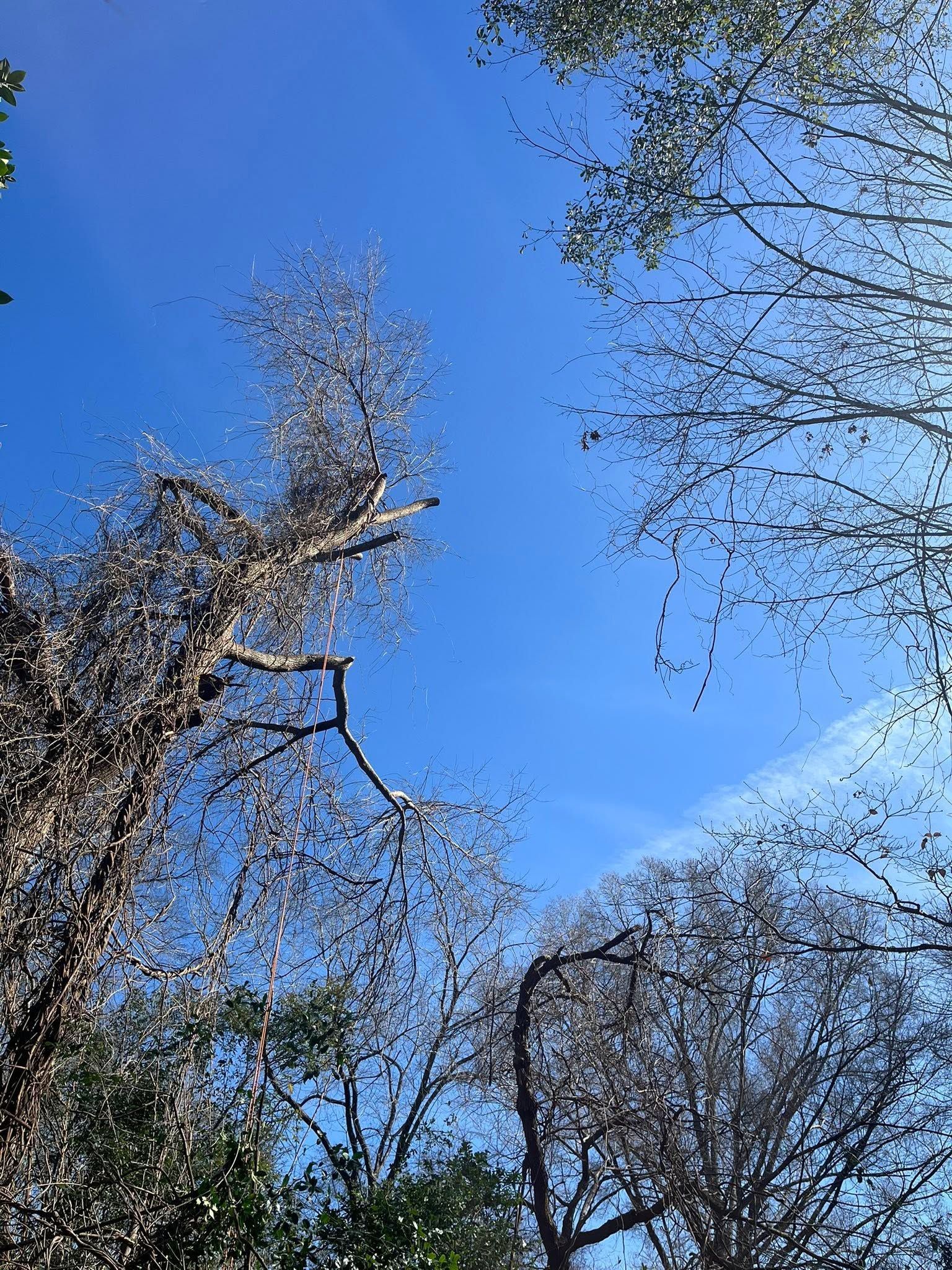
Codominant stems form when two leaders grow at similar rates from the same point, creating a weak union with included bark that never fuses properly. Ice accumulation or wind loading applies leverage to both stems simultaneously, forcing the union apart and splitting the tree down the center. Removing one stem while the tree is young redirects growth energy into a single dominant leader with a tapered trunk that flexes without breaking.
After corrective pruning, you'll notice a more symmetrical crown shape, improved light penetration to interior branches, and elimination of rubbing contact points where bark wore through to sapwood. The difference between pruning mature trees for aesthetics versus pruning young trees for structural integrity lies in intent—mature pruning refines appearance, while young-tree pruning builds a frame that lasts decades.
Climbing is done with rope work, not spikes, to avoid opening wounds on live trees. The crew operates with 27 years of field experience and full insurance, approaching pruning as arborist-minded work focused on tree longevity rather than just visual cleanup.
Questions About Structural Pruning Work
Pruning decisions for Deep East Texas properties balance immediate safety concerns with long-term tree development, particularly for species vulnerable to ice storm damage.
What's the best age to prune young pines for structure?
Structural pruning works best when trees reach ten to fifteen feet in height and branch diameter remains under two inches—cuts heal faster, redirection is easier, and the tree responds with vigorous upward growth rather than defensive sprouting.
How does ice storm loading affect pruning priorities in this region?
Ice accumulation adds hundreds of pounds to branch tips and exploits weak unions, making codominant stem correction and narrow crotch removal critical preventive work in Nacogdoches County and surrounding timber areas where ice events occur every few winters.
Why use hand tools instead of a chainsaw for smaller cuts?
Hand pruners and saws create cleaner cuts with less tissue crushing, allowing faster wound closure and reducing entry points for fungal spores—chainsaw cuts on small-diameter branches fray cambium and leave ragged edges that take longer to seal.
What's the difference between pruning and trimming on mature hardwoods?
Pruning removes specific limbs to correct structural issues or improve tree health, while trimming reduces overall canopy size for clearance—mature hardwoods benefit more from selective pruning that addresses individual problem limbs than wholesale crown reduction.
When should corrective pruning wait until the tree matures further?
If the tree is under significant drought stress, recently transplanted, or already pruned within the past year, additional corrective work can deplete energy reserves and slow recovery—waiting until the next dormant season allows the tree to stabilize before more cuts are made.
Eric Russell Tree Service has operated since 1983 with a focus on pruning that builds tree resilience, not just short-term appearance. Request a structural evaluation to identify correction priorities before the next ice season arrives.